From Biomass to Biochar
Welcome to the journey toward a Circular Carbon Economy built with biochar.
Biochar has the potential to fundamentally change how we work with carbon. Instead of treating carbon as a problem to be eliminated, biochar allows it to be captured, stabilised and put to long-term use — opening new pathways for climate action, sustainable production and regional value creation.
At the heart of this learning platform is the concept of the Circular Carbon Economy. A Circular Carbon Economy focuses on how carbon flows through systems — how it is captured, used, reused and stored — rather than on linear pathways that end in rapid emissions. Instead of “take, use, emit”, the goal is to keep carbon in productive use for as long as possible and to align climate protection with economic and social value creation.
This platform is dedicated to unveiling the potential of biochar as a practical tool for Circular Carbon Economy projects. It combines scientific foundations with hands-on approaches, showing not only what biochar is and how it is produced, but also how carbon can be actively managed through biochar-based value chains at local and regional level.
The course is structured into four interconnected modules, each focusing on a different part of the biochar value chain:
- Biomass: Understanding residual biomass as a source of carbon
- Biochar: Production processes, properties and quality aspects
- Bioproducts: Integrating biochar into long-lasting products and applications
- Bioeconomy: Developing regional Circular Carbon Economy projects and value chains
Each module consists of several learning units that combine theory with practical examples, reflection tasks and applied tools. Together, they guide you from basic concepts to a systems-level understanding of how biochar can be used effectively and responsibly.
The platform is designed for everyone interested in sustainable practices and biochar — from students and practitioners to farmers, businesses, municipalities, policymakers and curious individuals. No prior expertise is required; you can follow the modules step by step or explore specific topics according to your interests.
By the end of the course, you will understand biochar and its role in carbon management and also have worked through the key steps of developing a locally relevant Circular Carbon Economy project: Turning climate ambition into practical, place-based action.
Let’s get started!
Let’s get started!
fter watching the introduction video, take a few minutes to complete the questionnaire below. It helps you reflect on your background, interests and learning goals related to biomass and biochar.
There are no right or wrong answers. This is simply a starting point to personalise your learning journey.
Start your Bioeconomy journey
Before diving into the course, let’s take a moment to explore your current understanding of biochar, biomass, bioproducts, and the broader bioeconomy. This quiz will help you identify where you fit in and guide you to the most relevant sections of the course.
Ready to begin? Let’s find out where your bioeconomy journey starts!
Introduction
Biomass is organic matter derived from living or recently living organisms. It includes materials such as wood, crop residues, grasses, organic waste, manure or algae. Biomass is the primary source of carbon for biochar and therefore the starting point of every biochar-based value chain.
All biomass consists mainly of carbon, hydrogen and oxygen, bound together in complex organic structures known as fibres. These fibres are typically composed of cellulose, hemicellulose and lignin. The relative proportions of these components differ significantly between biomass types — and this has a direct influence on how biomass behaves during conversion and on the quality of the resulting biochar.
For example, woody biomass generally contains a higher proportion of lignin. This makes it more structurally stable and typically results in biochar with higher carbon content, greater stability and a more rigid pore structure. Grasses and agricultural residues, on the other hand, usually contain more cellulose and hemicellulose and often higher mineral (ash) content. This can lead to biochar with different surface properties, nutrient content and reactivity, which may be advantageous for certain applications but less suitable for others.
Understanding these differences is essential. Biomass is not interchangeable, and the choice of feedstock strongly affects:
- biochar yield and carbon stability,
- physical and chemical properties of the biochar, and
- suitability for specific applications, such as soil improvement, construction materials or technical uses.
BIOCHAR CHAIN
Biochar production is not a single step, but a complex sequence of activities. This process requires organised roles, from handling raw biomass to converting it through pyrolysis and applying it in practical uses.
Each role in this chain focuses on a specific part of the process and brings its own priorities and constraints. Understanding these roles helps clarify how biochar projects function in practice and where challenges or opportunities may arise.
The following video introduces the main roles within the biochar chain and explains what each contributes to the process, as well as the key challenges they encounter along the way.
BIOMASS SOURCES & PROPERTIES
Biomass comes from many different sources, and its properties vary widely depending on origin, composition and treatment. These differences strongly influence how biomass behaves during pyrolysis and what kind of biochar can be produced.
Not all biomass is equally suitable for biochar production. Materials differ in moisture content, ash content, fibre structure and chemical composition, which affects conversion efficiency, process stability and biochar quality. Harvesting, collection and preparation efforts can also vary significantly between biomass types.
Biomass is rarely unused — in most regions it already serves established purposes such as energy production, material use or composting. Biochar introduces additional and often higher-value pathways for using these same resources, but it must demonstrate clear benefits to be viable in practice. Understanding where biochar applications add value, fit existing systems and make effective use of biomass is therefore essential.
This makes it important to examine biomass sources not only in terms of availability, but also in terms of quality, current use and suitability for biochar production.
Let us explore the diversity of biomass and analyse its potential for sustainable biochar production.
BIOMASS Preparation
Before biomass can be converted into biochar, it must be properly prepared. Biomass preparation includes all steps that take place before pyrolysis — from harvesting and collection to transport, storage and pre-treatment.
The way biomass is handled during these stages largely determines whether it becomes a reliable and suitable feedstock for pyrolysis. Moisture content, contamination, particle size and material uniformity are shaped by decisions made during preparation and handling.
This learning unit focuses on the key preparation steps: harvesting or collection, transport and storage, and pre-treatment measures such as drying, sorting and size reduction. Understanding these steps clarifies how raw biomass is transformed into a consistent input for biochar production and why preparation is a critical part of the biochar chain.
Local/Regional Investigations on Residual Biomass
Throughout this module, you have explored what biomass is, how it differs in origin and properties, and what is required to prepare it for pyrolysis. You have already worked with examples of biomass streams from your region and examined how they are collected, handled and used.
Now, let’s bring these pieces together. In this summarizing unit, you will return to your selected biomass stream and create a structured profile of it based on the criteria discussed so far. You will assess its key properties, availability and current use, and make a first, well-reasoned judgement about its suitability for pyrolysis.
This synthesis step connects knowledge with application. It helps you consolidate what you have learned into a coherent assessment and prepares you to move forward from biomass characteristics toward understanding biochar itself in the next module.
Introduction
Biochar is a stable, carbon-rich material originating from biomass that is thermally treated under low or no oxygen conditions, typically through pyrolysis or gasification. As such, it forms a key link between raw biomass and a wide range of carbon-based products and applications.
This module focuses on understanding how biochar is formed, how its properties emerge, and how these properties can be influenced and assessed. Biochar is not defined by a single characteristic; instead, its behaviour and performance are shaped by a sequence of decisions along the production chain—from feedstock selection to conversion conditions and further processing steps.
The module is structured to build this understanding step by step:
- You begin by exploring the key properties of biochar, such as carbon stability, surface characteristics, mineral content and safety-related parameters.
- You then examine conversion, with a focus on pyrolysis, to understand how process conditions influence product yields and material properties.
- The module continues with pre-treatment, using IFBB as an example of how residual biomasses can be upgraded into more suitable feedstocks for biochar production.
- In post-treatment, you explore how biochar properties can be further modified, for example through steam activation, and what this means for material performance and process outcomes.
- Finally, the learning unit on quality integrates all previous steps and introduces frameworks for assessing biochar along the dimensions of safety, functionality and sustainability.
Together, these learning units provide a coherent view of biochar as a carbon material shaped by feedstock, processing and quality requirements. This understanding forms the foundation for the next module, Bioproducts, where the application and use of biochar in different product systems are addressed.
Shaped by Input and Process: The Properties of Biochar
Biochar is not a uniform material. Its properties vary widely depending on how it is produced and what it is produced from. Understanding these properties is essential, because they determine how biochar behaves, how safely it can be used, and which applications it is suitable for.
Some key properties of biochar are largely feedstock-dependent. The type of biomass used influences factors such as ash content, mineral composition and the potential presence of contaminants. Other properties are mainly process-dependent. Conversion conditions—especially temperature and residence time—shape carbon stability, pH, surface characteristics and the overall structure of the biochar. In practice, biochar properties always reflect a combination of input material and production parameters.
These properties are not assessed in isolation. They only gain meaning in relation to the intended application. Different use cases—such as soil improvement, water treatment or material applications—place different demands on biochar quality. What is an advantage in one context may be a limitation in another. The demand side therefore plays a key role in defining which properties are required and how “good” a biochar actually is.
At the same time, biochar production must meet safety and sustainability requirements. The European Biochar Certificate (EBC) provides a widely used framework that defines quality criteria, limit values and documentation requirements. Its focus is on ensuring that biochar is safe for people and the environment, while supporting climate and sustainability goals.
Finally, it is important to recognise that biochar production always involves trade-offs and constraints. Feedstock availability, technical limitations of conversion technologies and economic realities set boundaries on what can be achieved. There is no universally “perfect” biochar—only biochars that are well adapted to their purpose within these limits.
This learning unit explores the key properties of biochar, how they are shaped by feedstock and process choices, and how they relate to application requirements and quality standards.
Delve into the essential physical and chemical properties of biochar, which play a crucial role in its production and application across various fields.
Conversion to Biochar — Understanding Pyrolysis
Biochar is produced by converting biomass through thermochemical processes. Several conversion pathways exist, including pyrolysis, gasification and hydrothermal carbonisation. Among these, pyrolysis is the most widely used process for biochar production and is therefore the focus of this learning unit.
Pyrolysis is the thermal decomposition of biomass in the absence of oxygen. During this process, the feedstock is transformed into three product streams: a solid fraction (biochar and ash), a liquid fraction (bio-oil and tar) and a gaseous fraction (syngas, mainly composed of hydrogen, carbon monoxide, carbon dioxide, water vapour and methane). The relative proportions of these products depend on how the process is operated.
Along with the characteristics of the feedstock, key parameters such as temperature, residence time, heating rate and particle size determine the outcome of pyrolysis. In general, higher temperatures and more intensive process conditions shift conversion towards gases and liquids, while lower temperatures and longer residence times favour the formation of solid biochar. As a result, biochar yield and biochar properties are directly linked to conversion conditions.
In practice, different pyrolysis approaches are used depending on the desired outcome. While some processes prioritise liquid or gaseous products, biochar production typically relies on operating conditions that maximise the solid fraction and ensure stable, high-quality biochar.
This learning unit introduces the principles of pyrolysis and explains how conversion parameters shape both product distribution and biochar properties, forming the basis for later discussions on biochar quality and applications.
Post-treatment of Biochar — Physical Activation with Steam
Following pyrolysis, biochar properties can be further refined through post-treatment. A key method is physical activation, which significantly expands the internal surface area and enhances adsorption capacity. This makes the material ideal for diverse applications, such as removing impurities, contaminants, and odors from both liquids and gases. This learning unit focuses on steam activation as a key example.
Conventional activated carbon is often produced from hard coal or coconut shells. While these materials can achieve very high adsorption performance, their production is associated with high greenhouse gas emissions. Biochar-based activated carbon offers an alternative pathway, linking adsorption performance with renewable feedstocks and the potential for climate benefits.
Steam activation is a thermochemical post-treatment carried out at high temperatures, typically around 900 °C. During this process, steam is introduced into the reactor, where it reacts with the carbon surface of the biochar. This leads to a controlled partial oxidation of the carbon matrix. As carbon is selectively gasified, new pores are opened and existing pores are widened, significantly increasing surface area and adsorption capacity.
This activation comes with trade-offs. Part of the solid carbon is consumed during activation, resulting in a lower conversion rate, typically around 10–15 wt. % of the original dry biomass when considering the full conversion chain. At the same time, the partial oxidation increases the formation of hydrogen, raising the energy content of the pyrolysis gas.
Steam activation therefore illustrates how post-treatment can strongly enhance biochar functionality while influencing yields and energy balances. In this learning unit, you will explore how physical activation works, what changes it induces in biochar properties, and how these benefits and limitations must be balanced when designing biochar-based alternatives to conventional activated carbon.
Biochar Quality – From Production to Purpose
Biochar quality takes shape at the intersection of material properties, production choices and intended use. It cannot be judged in isolation, but only in relation to what the biochar is designed to do and how it is produced. This learning unit shifts the perspective from individual process steps to the overall outcome and asks a guiding question: What defines a high-quality biochar for a given application?
Biochar quality is defined along three closely connected dimensions: safety, functionality and sustainability.
- Safety is the first and non-negotiable dimension. A biochar must be safe to produce, handle and apply. This includes the absence of harmful substances such as toxic organic compounds or excessive heavy metals, as well as an assessment of risks related to dust formation, fine particles and worker exposure. Safety criteria ensure that biochar does not introduce new environmental or health risks while being used as a climate or environmental solution.
- Functionality is the second dimension. Biochar is produced for a purpose, and its quality depends on how well it fulfils that purpose. A biochar intended to improve soil fertility follows different criteria than one designed for long-term carbon storage or for use as a filtration or adsorption material. Properties such as surface area, pH, ash content, fixed carbon or pore structure only gain meaning when viewed in relation to the intended application.
- Sustainability forms the third dimension and extends quality beyond the material itself. It includes responsible feedstock selection (for example avoiding virgin wood or deforestation), environmentally sound harvesting and pre-treatment, greenhouse gas performance of the production process, and the fate of biochar-based products at the end of their life. A technically functional biochar cannot be considered high quality if it is produced or used in an unsustainable way.
To support transparent and comparable assessments, voluntary quality frameworks have been developed. The European Biochar Certificate (EBC) and the International Biochar Initiative (IBI) define widely used safety and product quality criteria for biochar. Building on these, the THREE C Quality approach extends the quality perspective across the entire value chain by explicitly addressing feedstock quality, biochar quality and carbon product quality, and by integrating ecological and sustainability considerations alongside material performance.
This learning unit brings all previous learning units together. The properties of biochar are shaped by feedstock choice, pre-treatment, conversion parameters and post-treatment steps. Assessing quality now means looking across this entire chain and matching the resulting biochar with the requirements of a specific application. Quality, in this sense, is not about producing the “best” biochar in general, but about producing the right biochar for the right use, in a way that is safe, functional and sustainable.
Introduction
Biochar only becomes impactful when it is put to use. While the previous module focused on how biochar is produced and how its quality is defined, this module shifts the perspective from material to application.
Biochar-based products already exist across many sectors—from agriculture and horticulture to construction, filtration, and waste treatment. In each case, biochar is not used just to store carbon, but because its physical and chemical properties perform a specific job: retaining water, filtering pollutants, stabilising materials, or supporting biological processes.
In this module, you will explore how biochar is translated into real-world solutions. You will start by discovering existing biochar products and reflecting on the problems they address and the roles biochar plays within them. From there, you will step into the role of a designer and innovator, identifying new opportunities where biochar could create value in your own environment.
Following a design thinking logic, you will move from inspiration and opportunity scanning to defining a clear challenge, developing a technical solution blueprint, and stress-testing your idea through external feedback. By the end of the module, you will have created a structured biochar product factsheet—a concise prototype that combines technical reasoning, sustainability impact, and practical feasibility.
Get a first impression of some projects already using the potential of biochar.
The Sectors
Agriculture
Biochar enhances soil fertility, improves water retention, and supports plant growth. By storing carbon in the soil, it also contributes to climate-friendly farming.

Building Industry
Biochar is being integrated into construction materials for better insulation, moisture control, and sustainability. It helps reduce the carbon footprint of buildings.

Horticulture
In horticulture, biochar boosts plant health by improving soil structure and nutrient availability. It’s a sustainable alternative to peat-based growing media.
Waste Management
Biochar turns organic waste into a valuable resource. It helps managing landfill waste, captures carbon, and can be used to filter pollutants in composting and wastewater treatment.
Water Purification
Biochar’s ability to trap contaminants makes it a natural filter for water purification. It’s used to remove pollutants from drinking water, wastewater, and stormwater.
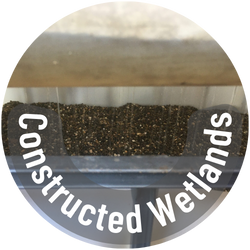
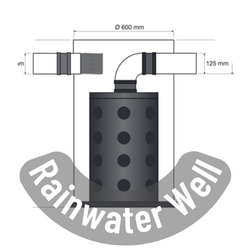
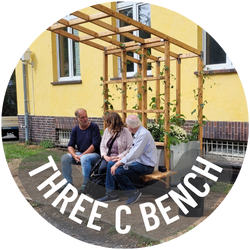
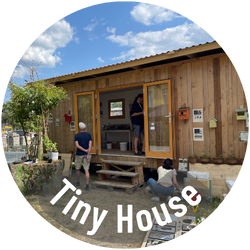
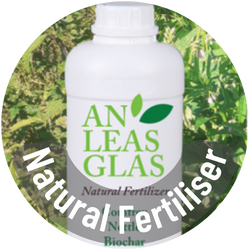
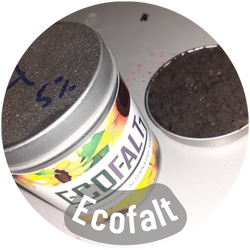
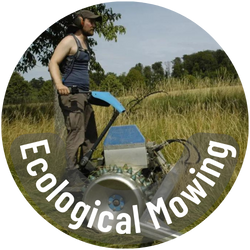
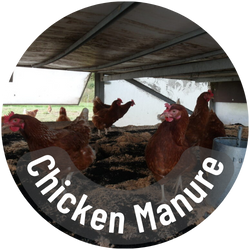
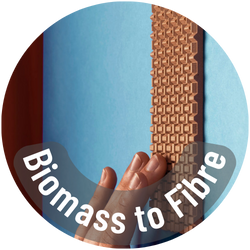
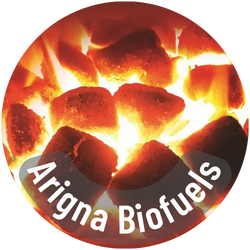
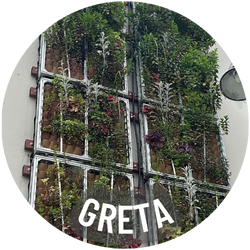
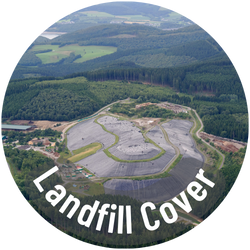
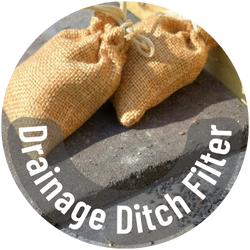
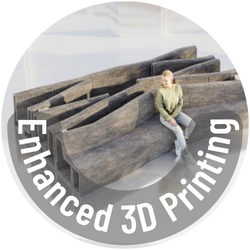
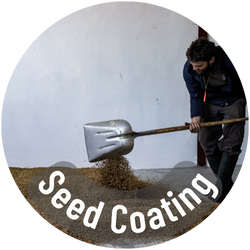
Explore our Interactive Product Gallery.






Introducing a Circular Carbon Economy at Regional Level
Decisions about biomass are already part of regional infrastructure — from agricultural residues and green waste to forestry by-products and organic municipal waste. These materials are central to the bioeconomy, yet the way they are used often determines whether carbon is retained in the region or released quickly back into the atmosphere.
The bioeconomy broadly aims to replace fossil resources with biological ones. However, not all bio-based pathways deliver the same climate benefits. Many still lead to rapid carbon release, for example through short-lived products or energy use. This learning module therefore approaches the bioeconomy through a more specific lens: the Circular Carbon Economy.
A Circular Carbon Economy focuses explicitly on carbon management. It asks not only which biological resources are used, but how carbon flows through regional value chains — and how long it remains in productive use. The goal is to retain, stabilise and reuse carbon as part of coordinated regional systems, rather than allowing it to escape quickly as CO₂.
This perspective represents a clear shift:
- from linear biomass use to circular carbon value chains,
- from carbon as a problem to carbon as a measurable and manageable resource, and
- from isolated bio-based projects to integrated regional strategies.
For regional stakeholders — including agriculture, construction, horticulture, waste management and municipalities — this approach creates concrete opportunities. Residual biomass can be converted into long-lasting carbon-based products, such as biochar applications in construction materials, soils, landscaping or technical systems. In doing so, regions can reduce emissions, create durable carbon sinks and strengthen local economies at the same time.
Introducing a Circular Carbon Economy requires collaboration across sectors and shared tools for decision-making. Stakeholders need a common basis to assess carbon impacts, compare options and develop solutions that make sense under real regional conditions.
Building on the previous modules, this learning unit guides you step by step from understanding regional carbon potential to developing a concrete bioeconomy project — turning climate objectives into practical, region-specific action.
This potential is defined not only by the upstream availability of residual biomass, but also by the downstream capacity of the region to use biochar in meaningful and long-lasting applications. A Circular Carbon Economy project can therefore start from two complementary perspectives: upstream and downstream.
From an upstream perspective, residual biomass represents a source of carbon that is often underused or lost through disposal or combustion. Understanding which biomass streams exist, in what quantities and under what conditions, is essential for assessing how much carbon could realistically be captured and stabilised as biochar.
From a downstream perspective, biochar only creates impact if it can be absorbed by regional applications. Construction, horticulture, agriculture, landscaping or technical uses each have different requirements and volumes. Analysing how much biochar could realistically be used in the short, medium and long term is therefore just as important as knowing how much biomass is available.
Together, upstream biomass potential and downstream application potential determine how much carbon can be retained, circulated and put to productive use within a region. Focusing on only one side risks creating projects that either lack feedstock or lack viable applications.
A systematic analysis helps to clarify:
- which residual biomass sources exist upstream,
- how much biomass could be recovered and how much biochar produced,
- which downstream biochar applications are feasible, and
- how upstream and downstream potentials can be aligned.
In the following task, this analysis will be approached from one of these two entry points, depending on your role or perspective. Combined, they form the foundation for carbon assessment with CCMS, stakeholder mapping and realistic project development.
By starting with both upstream and downstream perspectives, a balanced and region-specific basis is created for Circular Carbon Economy projects that can move from idea to implementation.
Task 1: Analyse Carbon Potential in Your Region
Circular Carbon Economy projects can be approached from different starting points. Choose the option that best fits your role or perspective.
a) Biomass-Driven Perspective (for stakeholders close to biomass supply, recovery or processing)
Analyse the residual biomass flows in your region to identify biomass streams that are underused or lead to rapid carbon release. Use available data and local knowledge to understand their origin, quantities, seasonality and current use.
Document the results in the Biomass Factsheet, including:
- Type of residual biomass
- Approximate quantities and seasonality
- Origin and current use
- Key constraints
b) Application-Driven Perspective (for stakeholders close to construction, horticulture or other end uses)
Starting from a specific product, process or application, estimate how much biochar could realistically be used:
- in the short term (pilot or initial use),
- in the medium term (scaling within current operations),
- in the long term (full potential or broader adoption).
Document these estimates, along with any assumptions, requirements or constraints.
Estimates are sufficient. The gathered data provides the basis for carbon assessment with CCMS and further project development.
TASK 2: PROJECT IDEAS
Generate Biochar Project Ideas from Different Entry Points
Choose the task that best fits your role or perspective — or complete both if relevant.
a) Biomass-Driven Perspective (for stakeholders closer to biomass supply, recovery or processing)
Based on the biomass analysis, identify residual biomass streams in your region that are currently underused or could be used more effectively for biochar production.
Brainstorm and briefly describe 2 biochar-related project ideas, focusing on how these biomass streams could be converted into biochar and used in local or regional applications.
b) Application-Driven Perspective (for stakeholders closer to product development, construction, horticulture or end use)
Starting from your current products, services or applications, identify where biochar could be integrated or could replace less sustainable materials or practices.
Brainstorm and briefly describe 2 biochar-related project ideas, focusing on potential uses, benefits and performance requirements from a user perspective.
The aim is to explore different entry points into biochar value chains and to make visible where supply and demand perspectives can connect in the next steps of the module.
TASK 3: CCMS
Introducing the Circular Carbon Management System (CCMS)
The carbon potential analysis has provided a clearer understanding of the regional situation — both upstream, in terms of available biomass, and downstream, in terms of possible biochar applications. The next step is to move from collected data to structured project development.
While the Circular Carbon Economy offers an overarching framework, regions need a practical tool to work systematically with carbon when designing projects, comparing options and making decisions across sectors. Measuring emissions alone is not sufficient. What is needed is a way to make carbon flows visible, comparable and actionable at regional level.
The Circular Carbon Management System (CCMS) was developed to meet this need. It is grounded in the Carbon Handprint philosophy, which shifts the focus from avoiding emissions to actively creating positive impact — by keeping carbon in use rather than allowing it to escape immediately as CO₂.
CCMS treats carbon as a measurable unit of value, comparable to the role money plays in a local economy. Just as a Euro can generate greater benefit when it circulates within a region, carbon can deliver higher climate, economic and social value when it remains within regional value chains. CCMS helps analyse how different choices influence this circulation.
In many conventional biomass pathways, carbon leaves the system quickly through combustion, decomposition or short-lived uses. CCMS systematically evaluates alternative pathways, making it transparent where carbon is lost, where it is retained, and how it can be stabilised and multiplied through circular use.
CCMS was specifically designed to accompany the biochar value chain. Biochar provides a concrete and robust way to work with carbon flows, because it converts carbon captured by plants via photosynthesis into a stable, solid form that can be integrated into long-lasting products and applications. CCMS quantifies how much carbon is retained through biochar production, where it is stored along the value chain, and how upstream biomass choices and downstream applications interact at regional level.
In this learning unit, CCMS is applied as a hands-on working tool. Using real or realistic data from your region, the previously gathered information is analysed step by step to:
- map biomass sources and value chains,
- analyse carbon flows and losses,
- compare alternative utilisation pathways, and
- identify opportunities to improve carbon retention and local value creation.
By expressing impacts in a common unit — carbon — CCMS creates a shared analytical basis for dialogue between agriculture, construction, horticulture, municipalities and other sectors. It supports informed decision-making and helps translate climate goals into concrete, region-specific project concepts.
In this way, CCMS enables stakeholders not only to assess what happens, but to actively shape outcomes — leaving a clear and intentional Carbon Handprint that others along the value chain can recognise and build upon.
Apply the Carbon Management Tool to Your Bioeconomy Project
In this task, you will apply the Circular Carbon Management System (CCMS) to your bioeconomy project idea.
Using the results from your biomass and/or carbon potential analysis, enter the relevant information into the tool to map and assess carbon flows along your value chain.
Focus on:
- Defining the scope of your project
- Identifying where carbon is retained or lost
- Comparing different biomass utilisation options
Estimates and assumptions are sufficient. The aim is to use CCMS to understand the carbon potential of your project and create a solid basis for the next steps.
TASK 4: STAKEHOLDERS
Getting the Right People on Board
Regional bioeconomy projects are not successful solely on the basis of technology and sound calculations. They succeed because the right people are involved at the right time.
Whether a project focuses on biochar, residual biomass or circular carbon value chains, its success depends on cooperation across many sectors. Biomass availability, processing, product development, certification, marketing and final use are usually spread across different organisations, professions and interests. If even one key group is missing or involved too late, promising projects can stall or fail.
Stakeholder analysis is therefore one of the most important early steps in any regional bioeconomy initiative. It helps to answer practical questions such as:
- Who controls or provides the biomass?
- Who is responsible for collection, recovery and logistics?
- Who operates or could operate conversion technologies such as pyrolysis?
- Who develops, certifies, sells or uses the final products?
- Who provides expertise, research, advice or quality assurance?
- Who needs to approve, support or regulate the process?
In a Circular Carbon Economy, stakeholders are connected along a value chain, not working in isolation. Understanding these connections makes it easier to identify cooperation opportunities, anticipate challenges and build trust between partners.
In the following learning unit, you will apply this approach to your own regional scenario. You will be guided to map relevant stakeholders along the value chain, including:
- Biomass suppliers
- Recovery and logistics actors
- Conversion and processing (e.g. pyrolysis)
- Retailers and market actors
- Auditors and laboratories
- Advisors and service providers
- Research and development organisations
- Users of biochar-based products
- Public authorities and municipalities (where relevant)
By filling in the stakeholder scheme with real names of people, businesses and organisations, you will begin to turn an abstract project idea into a real, workable regional network.
This step lays the foundation for everything that follows — from pilot implementation to scaling up and achieving long-term impact.
Identify and map relevant stakeholders
Identify the key stakeholders relevant to the bioeconomy project and enter them into the stakeholder diagram provided.
Think about all organisations, businesses and institutions that are relevant along your project’s value chain — from biomass supply to final use.
Enter the names of real people, companies or organisations where possible, or the type of actor if specific names are not yet known.
The goal is to create a realistic overview of who needs to be involved to make your project work, and to identify where cooperation or new connections may be required.